But You Don't Look Like a Muslim by Rakhshanda Jalil
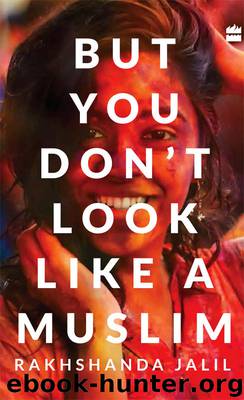
Author:Rakhshanda Jalil
Language: eng
Format: azw3, epub
Tags: Essays on Identity and Culture
ISBN: 9789353029319
Publisher: HarperCollins Publishers India
Published: 2019-05-02T04:00:00+00:00
10
WHATEVER HAPPENED TO
‘JAI JAWAN! JAI KISAN!’
THE PRESENT APATHY TOWARDS THOSE who, quite literally, give us our daily bread seems strange given our ethos and civilization that has traditionally celebrated, even valorized, the tiller of the land. In an age when most mainstream newspapers either shuffle the news of phenomenally large gatherings of irate farmers who congregate from the hinterland or disregard their presence altogether in our midst when they make the long march to our cities to voice their anguish, we are reminded of a time when we as a people were less blithe and our writers, thinkers, poets less fearful at best, and less blasé at worst.
From culture to literature to fairs and festivals, the farmer has held a place of pride in the popular imagination. Across the length and breadth of India, many of our festivals have their origins in older, agricultural rites and rituals. Given that we are a largely agrarian society depending on seasonal monsoon rains for irrigation, the land and those who till it to fill our food baskets have always featured in the Indian literatures from the various bhashas. And be it folk song or high literature, the farmer has never been as beyond the pale as now, nor so pushed to the margins of our collective consciousness as at present.
In the early twentieth century, with large-scale land reforms happening in different parts of the world and the Russian Revolution opening a window into a world of immense possibilities, Hindi and Urdu writers, led by Premchand, began to write robust, socially purposive literature located in India’s vast hinterland. Village tales such as ‘Sadgati’ (Salvation), ‘Poos ki Raat’ (A Winter’s Tale), ‘Do Bailon ki Katha’ (The Story of Two Oxen), ‘Sawa Ser Gehuun’ (A Quarter and One Ser of Wheat), ‘Kafan’ (The Shroud) among others feature arrogant Thakurs, bhang-drinking pundits, hard-working but often landless labourers, and portray a world of stark poverty and inequality. But the villains, and there are plenty in Premchand’s oeuvre, are usually products of a rigid social order and caste inequalities in most of these stories.
It was not until the spectacular flowering of the literary grouping known as the Progressive Writers’ Movement from the 1930s onwards that the focus shifted to government policies, need for land reform and urgent redress of the farmer’s genuine problems. Until this point, writers and poets were content to draw attention to agrarian distress without linking it specifically to policies at the apex that would trickle down to the farmer at the lowest rung of the food pyramid. Some such as the poet Iqbal were content to write rousing, even inflammatory poems, addressing the peasants struggling under the yoke of imperialism in ‘Punjab ke Dehqaan ke Naam’ (To the Farmers of the Punjab):
Butan-e-shaub-o-qabail ko torh
Rasoom-e-kuhan ke salasil ko torh
Yehi deen-e-mohkam, yehi fateh-e-baab
Ke duniya mein touheed ho be-hijab
Break all the idols of tribe and caste
Break the old customs that fetter men fast!
Here is true victory, here is faith’s crown –
One creed and one world, division thrown down!
And
Download
But You Don't Look Like a Muslim by Rakhshanda Jalil.epub
This site does not store any files on its server. We only index and link to content provided by other sites. Please contact the content providers to delete copyright contents if any and email us, we'll remove relevant links or contents immediately.
| Anthropology | Archaeology |
| Philosophy | Politics & Government |
| Social Sciences | Sociology |
| Women's Studies |
Nudge - Improving Decisions about Health, Wealth, and Happiness by Thaler Sunstein(7758)
The Fire Next Time by James Baldwin(5504)
iGen by Jean M. Twenge(5454)
Adulting by Kelly Williams Brown(4622)
The Sports Rules Book by Human Kinetics(4448)
The Hacking of the American Mind by Robert H. Lustig(4425)
The Ethical Slut by Janet W. Hardy(4308)
Captivate by Vanessa Van Edwards(3864)
Mummy Knew by Lisa James(3729)
In a Sunburned Country by Bill Bryson(3583)
The Worm at the Core by Sheldon Solomon(3512)
Ants Among Elephants by Sujatha Gidla(3494)
The 48 laws of power by Robert Greene & Joost Elffers(3381)
Get What's Yours for Medicare: Maximize Your Coverage, Minimize Your Costs by Philip Moeller(3099)
Suicide: A Study in Sociology by Emile Durkheim(3045)
The Slow Fix: Solve Problems, Work Smarter, and Live Better In a World Addicted to Speed by Carl Honore(3040)
The Tipping Point by Malcolm Gladwell(2963)
Humans of New York by Brandon Stanton(2909)
Handbook of Forensic Sociology and Psychology by Stephen J. Morewitz & Mark L. Goldstein(2739)
